
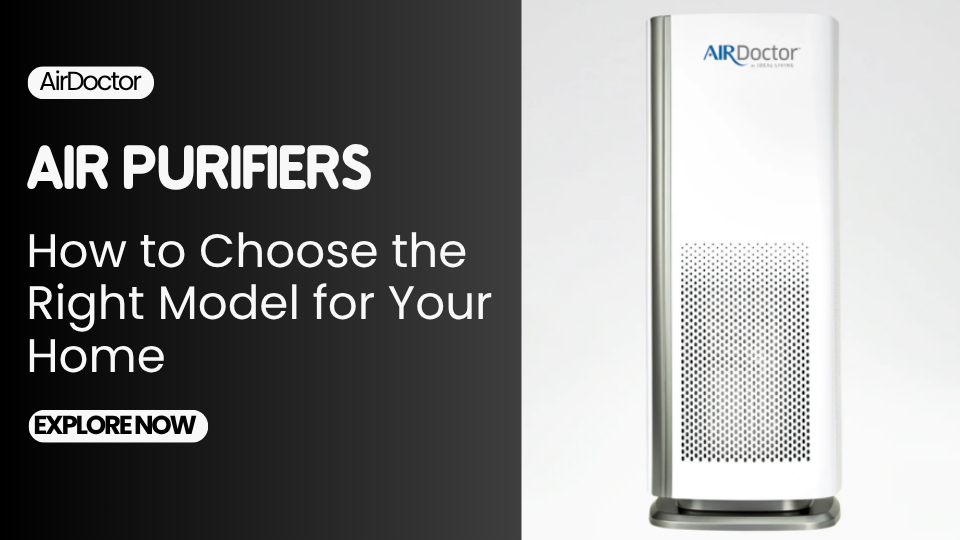
Indoor air quality is an important consideration for anyone who wants a cleaner and more comfortable living environment. Dust, pollen, pet dander, smoke, and airborne particles can enter your home through windows, doors, clothing, and ventilation. An air purifier can help reduce certain airborne pollutants, but choosing the right device requires more than comparing prices or looking at product claims.
AirDoctor offers air purifiers in different sizes, with filtration systems designed to capture fine particles and help reduce certain gases and odors. Understanding room coverage, filtration technology, filter replacement costs, and everyday maintenance can help you decide whether an AirDoctor model suits your needs. This guide explains the key features to evaluate, compares selected models, and highlights practical considerations before purchasing an air purifier for your home.
Why Choosing the Right Air Purifier Matters
An air purifier should match the size of the room where you intend to use it. A unit designed for a bedroom may not provide sufficient air circulation for a large, open-plan living area.
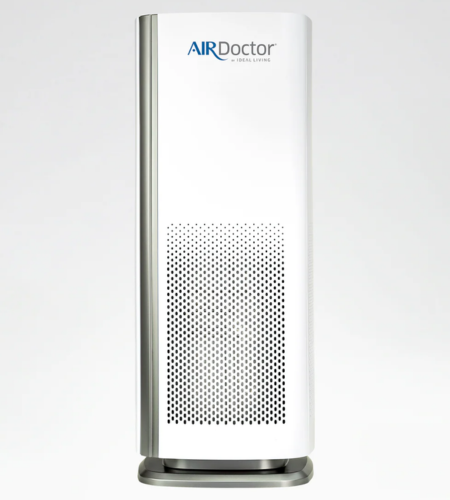
Before choosing a model, consider these factors:
- Room size: Check the manufacturer’s recommended coverage and the number of air changes per hour.
- Pollutants: Dust, pollen, smoke particles, and gaseous odors require different filtration approaches.
- Noise: Consider the sound level if the purifier will operate in a bedroom or workspace.
- Maintenance: Replacement filters add to the long-term cost of ownership.
- Placement: Leave sufficient space around the unit according to its operating instructions.
Clean air delivery rate (CADR) is another useful comparison metric. It measures how quickly an air purifier delivers filtered air for specific particle categories, including smoke, dust, and pollen. Higher CADR values generally indicate greater particle-cleaning capacity under the relevant test conditions.
Which AirDoctor Model Should You Consider?
The following examples use published manufacturer specifications. Coverage figures are model-specific and should be checked again before purchasing.
AirDoctor 1000 — Smaller rooms
The manufacturer lists coverage of up to 285 square feet at four air changes per hour. Its three-stage filtration system makes it an option to investigate for smaller bedrooms, nurseries, and similar spaces.
Compact Solution for Small Rooms
AirDoctor 1500 — Small to medium rooms
This model is listed at $399 on the manufacturer’s product page retrieved for this guide, with coverage of up to 320 square feet at four air changes per hour. Verify the current price before ordering.
Advanced Filtration for Medium size Rooms
AirDoctor 3500 — Medium to large rooms
The manufacturer lists coverage of up to 630 square feet at four air changes per hour. This may be relevant for larger bedrooms or living spaces, provided the room falls within the model’s appropriate operating range.
UltraHEPA® High-Performance Air Cleaning
AirDoctor 5500 — Larger open spaces
This model is listed for spaces up to 1,043 square feet at four air changes per hour. Its larger capacity may suit open-plan areas where a smaller purifier would be less appropriate.
These figures are manufacturer-published specifications, not a guarantee of identical results in every home. Actual performance depends on room layout, operating speed, placement, and indoor conditions.
How AirDoctor Fits Your Indoor Air Quality Needs
AirDoctor is a brand specializing in air purification products for residential spaces. Its product range includes compact options for smaller rooms and larger units designed for more spacious areas.
AirDoctor filtration systems use a pre-filter, carbon filter, and UltraHEPA filter to capture large particles, odors, and fine airborne particles.
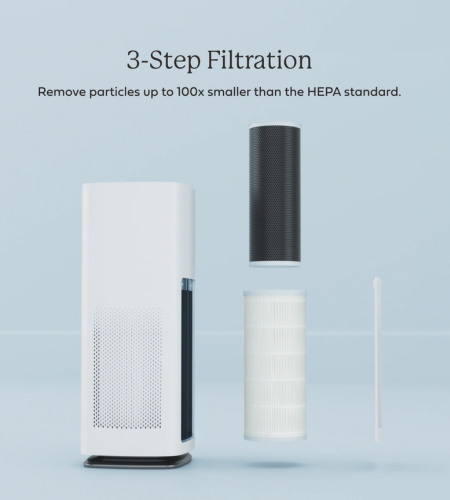
This combination may be worth considering if you want to address multiple indoor air quality concerns with one device. However, an air purifier does not replace appropriate ventilation, source control, or professional help for persistent indoor air problems.
Key Features and Benefits to Evaluate
When comparing AirDoctor air purifiers, focus on features that affect your daily use rather than relying on marketing language alone.
1. Fine-particle filtration
AirDoctor’s UltraHEPA filtration is designed to capture particles as small as 0.003 microns, according to the manufacturer. This specification can help you compare filtration claims, but laboratory capture performance should not be interpreted as proof that a device prevents illness or eliminates every airborne contaminant.
2. Carbon and VOC filtration
Carbon-based filters target certain gases, odors, and volatile organic compounds (VOCs). If cooking smells, smoke odors, or household chemical emissions are a concern, examine the specific filter design and its replacement schedule. Results depend on the pollutant, concentration, and operating conditions.
3. Automatic operation
Some AirDoctor models include an air-quality sensor and automatic mode, which can adjust fan operation in response to detected air-quality changes. Check the individual product listing to confirm which controls and smart features are included.
4. Room coverage and airflow
Coverage ratings are most useful when you compare models at the same air-change rate. If you have a large room, choosing a purifier solely because its maximum advertised square footage looks sufficient may overlook the importance of airflow and room layout.
Pricing, Replacement Filters, and Maintenance
The initial purchase price is only one part of the cost. Replacement filters, electricity use, and the frequency of maintenance also matter.
AirDoctor sells replacement filter products for its different purifier series. Its support documentation lists model-specific replacement options and prices, but these may change over time. Always confirm compatibility with your exact model before ordering.
Use this checklist before purchasing:
- Check whether the initial filter set is included.
- Confirm the recommended replacement intervals for each filter stage.
- Calculate the likely annual filter expense.
- Check whether the product and replacement filters are available for delivery to your location.
- Review the current warranty terms, returns policy, and any applicable shipping fees.
Filter life can vary with usage and indoor air quality. A dusty home or frequent exposure to smoke may require more attention to maintenance than a relatively clean environment.
Pros and Cons of AirDoctor Air Purifiers
Potential advantages
- Multiple model sizes for different room requirements.
- Filtration stages designed for particles, gases, and odors.
- Published model specifications that help with comparisons.
- Replacement filter options for supported models.
Potential drawbacks
- Replacement filters create ongoing expenses.
- Larger-capacity models may require more space and a higher initial budget.
- Performance claims and coverage ratings need to be assessed against your specific room and needs.
- Availability, shipping costs, and warranty coverage may vary by destination.
The most suitable model is the one that meets your actual room requirements and maintenance budget, not necessarily the one with the highest capacity.
Frequently Asked Questions
1. What is an AirDoctor air purifier used for?
AirDoctor air purifiers are designed to filter indoor air by capturing airborne particles and, depending on the model, targeting certain gases and odors. They can complement other indoor air quality measures.
2. How do I choose the right AirDoctor model?
Measure your room, compare coverage at the same air-change rate, review filtration features, and consider noise and replacement-filter costs before selecting a model.
3. How often should AirDoctor filters be replaced?
Replacement frequency varies by model, filter type, and operating conditions. Follow the instructions for your specific purifier and check its filter indicator where available.
4. Are AirDoctor replacement filters expensive?
Costs depend on the model and which filters require replacement. Compare the current price of compatible individual filters or replacement packs and include these expenses in your long-term budget.
5. Can an air purifier remove every indoor pollutant?
No. Air purifiers have limitations, and different pollutants require different control methods. Ventilation, removing pollution sources, and addressing moisture problems remain important.
6. Where can I check AirDoctor specifications and prices?
Visit the official AirDoctor website to review product details, current pricing, compatible filters, and applicable purchase terms.
Conclusion
Choosing an AirDoctor air purifier starts with understanding your room size, the pollutants you want to address, and the cost of maintaining the unit. Compare the AirDoctor 1000, 1500, 3500, and 5500 against their published coverage, filtration features, and replacement-filter requirements rather than selecting a model based on size alone.
A suitable AirDoctor air purifier may be a useful part of an indoor air quality plan, but the right choice depends on your home, budget, and priorities. Review the specifications and current purchase terms on the official AirDoctor store before making your decision.
 Harvey Glen