
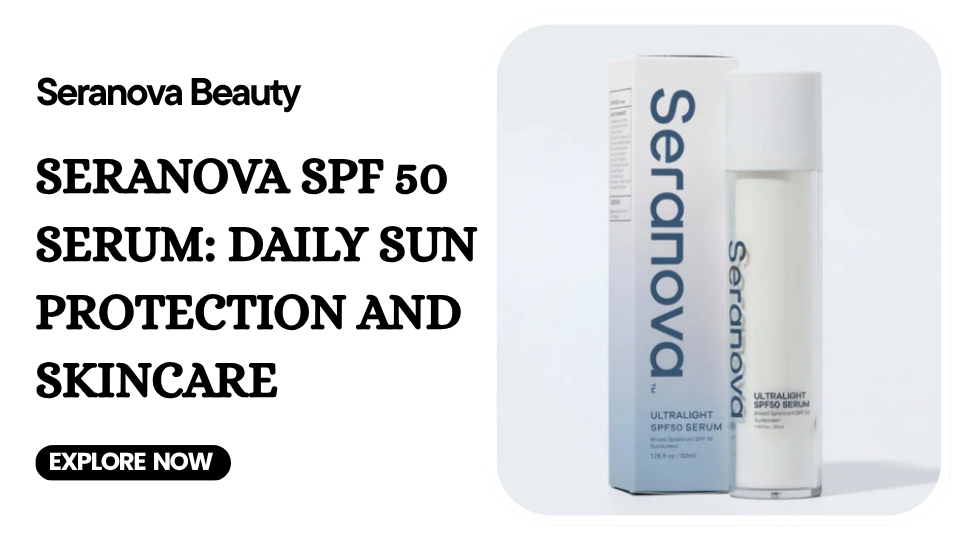
Daily sun protection is an important part of a skincare routine, whether your main concern is uneven skin tone, premature skin aging, or maintaining a healthy-looking complexion. Ultraviolet (UV) radiation can contribute to sunburn, visible skin changes, and long-term skin damage, making sunscreen useful throughout the year. However, choosing a product involves more than looking at its SPF number. Its protection level, formulation, ingredients, and suitability for your skin all matter.
Serum-style sunscreens offer another option for people who prefer lightweight skincare products. Seranova’s SPF 50 Protect & Repair Serum combines sun protection with ingredients intended to support skin hydration and barrier care. Understanding how sunscreen works, what this formula contains, and how to apply sun protection correctly can help you decide whether this type of product belongs in your daily routine.
Why Daily Sun Protection Matters
Sunscreen helps protect skin from UV radiation. UVB rays cause sunburn, while UVA rays contribute to premature aging. Choose a broad-spectrum sunscreen that protects against both.
Consistent sun protection helps reduce UV-related skin damage. Seek shade, wear protective clothing, and limit exposure during intense sunlight.
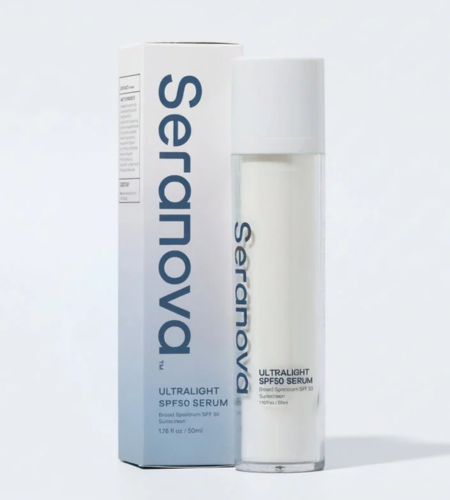
SPF measures protection against sunburn-causing UV radiation under standardized testing conditions. SPF 50 does not mean you can remain in the sun indefinitely, nor does it block every UV ray. Broad-spectrum labeling is also important because it indicates protection against both UVA and UVB radiation.
For everyday use, select a sunscreen you can apply generously and reapply as directed. A product that feels comfortable on your skin may be easier to incorporate into a consistent routine.
What Is Seranova SPF 50 Protect & Repair Serum?
Seranova offers an SPF 50 Protect & Repair Serum designed to combine sunscreen with moisturizing skincare ingredients. Its official product information describes the formula as a lightweight, broad-spectrum sunscreen intended for daily use.
The listed formulation includes UV filters alongside ingredients such as niacinamide, ceramides, and sodium hyaluronate. These ingredients serve different purposes, so it is useful to understand their roles instead of treating them as interchangeable.
The product may appeal to people who prefer combining sun protection with selected skincare benefits in one step. Nevertheless, the best sunscreen is one that suits your skin, provides appropriate protection, and can be applied in sufficient quantity.
Before choosing it, review the current product label, full ingredient list, application directions, and availability in your location.
Ingredients and Their Role in Skincare
Broad-Spectrum UV Filters
Sunscreen filters help protect the skin by absorbing or reflecting UV radiation, depending on the filter and formulation. Seranova’s listed SPF 50 formula includes avobenzone, octocrylene, and titanium dioxide, alongside other ingredients.
The presence of these filters does not eliminate the need for correct application. Follow the product directions and reapply as recommended, especially after swimming, sweating, or towel drying.
Niacinamide
Niacinamide, also known as vitamin B3, is commonly used in skincare products to support the skin barrier and improve the appearance of uneven tone and texture.
Its effects depend on the complete formulation and individual skin response. It should not be considered a substitute for sunscreen, particularly when addressing sun-related discoloration.
Ceramides
Ceramides are lipids naturally found in the skin barrier. Topical skincare products containing ceramides are often used to help maintain moisture and support the barrier’s protective function.
Seranova’s listed formula contains ceramides, making this ingredient group relevant to people who want sun protection alongside routine moisturizing care.
Sodium Hyaluronate
Sodium hyaluronate is a form of hyaluronic acid used in skincare to attract and retain moisture. It can help skin feel hydrated and appear temporarily plumper.
Hydration and UV protection are different functions. A moisturizing ingredient can complement sunscreen, but it does not independently provide meaningful sun protection.
Is a Serum Sunscreen Right for You?
A serum-format sunscreen may suit someone who prefers a lightweight skincare texture. However, texture alone does not determine whether a sunscreen is appropriate. It is also important to check the SPF rating, broad-spectrum protection, and ingredient list before adding it to your daily routine. Choosing a formula that feels comfortable on your skin can make regular application easier and help you maintain consistent sun protection.
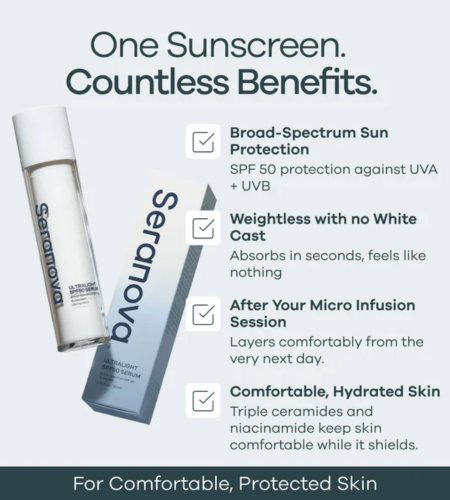
Consider these factors before choosing a product:
- Protection: Check that it provides broad-spectrum coverage and an appropriate SPF.
- Skin compatibility: Review the ingredients if you have sensitive skin or known allergies.
- Application: Make sure you can apply enough product without discomfort.
- Daily practicality: Consider how it works with your moisturizer and makeup.
- Availability: Check current pricing, shipping options, and return conditions before ordering.
People with very sensitive skin or a history of reactions to sunscreen ingredients may benefit from consulting a dermatologist. Patch testing can help identify some reactions, although it cannot guarantee that a product will never cause irritation.
How to Add SPF 50 Serum to Your Routine
A simple routine can make daily sunscreen application easier.
Morning routine:
- Cleanse your face with a gentle cleanser if needed.
- Apply your usual compatible skincare products.
- Apply your sunscreen according to the manufacturer’s directions, using enough to cover all exposed skin.
- Allow the product to settle before applying makeup, following its instructions.
- Reapply sunscreen as directed, particularly during extended outdoor exposure.
Remember to protect commonly missed areas, including the ears, neck, and exposed skin around the hairline. Use additional sun-protective measures when spending extended periods outdoors.
If you use exfoliating acids, retinoids, or other potentially irritating products, pay attention to your skin’s response and seek professional advice if you are unsure how to combine them.
Pricing, Shipping, and Buying Considerations
Before purchasing Seranova SPF 50 Protect & Repair Serum, review the official store’s current product listing. Prices, bundle offers, subscription terms, and delivery arrangements can change, so confirm the details displayed at checkout.
If the store offers several package sizes, compare the total cost with the amount of product included. Consider how frequently you use sunscreen and whether a subscription is practical for your routine.
Also review the return policy, payment details, and estimated delivery time for your location. International customers should check any applicable import charges or local restrictions rather than assuming that the same terms apply everywhere.
Avoid choosing sunscreen exclusively because of a discount or marketing claim. Protection, comfort, ingredient suitability, and consistent use are more important considerations.
Pros and Cons of Serum-Style Sunscreen
Potential advantages
- Combines sunscreen with selected skincare ingredients.
- May appeal to people who prefer lightweight product textures.
- Can simplify a morning routine when compatible with other products.
- Provides an option for consumers interested in SPF 50 protection.
Potential disadvantages
- Not every formulation suits every skin type.
- Correct application and regular reapplication remain necessary.
- A serum texture does not guarantee better protection than a conventional sunscreen.
- Price and availability may influence whether it fits your budget.
Frequently Asked Questions
Is SPF 50 enough for everyday use?
SPF 50 provides a high level of protection against sunburn under test conditions. Broad-spectrum coverage, adequate application, reapplication, and other protective measures remain important.
Can I use serum sunscreen under makeup?
Many sunscreens can be worn under makeup. Follow the product directions and allow it to settle as instructed before applying makeup.
Does SPF 50 prevent all signs of aging?
No. Sunscreen helps reduce UV-related skin damage, but it cannot prevent every cause of skin aging or stop the natural aging process.
Is Seranova SPF 50 Serum suitable for sensitive skin?
Suitability varies by person. Review the full ingredient list and consult a dermatologist if you have known sensitivities or a history of sunscreen reactions.
Do I need moisturizer if my sunscreen contains hydrating ingredients?
That depends on your skin’s needs and the sunscreen’s formulation. If your skin still feels dry, a compatible moisturizer may be useful.
Conclusion
Daily sun protection is a practical foundation for maintaining healthy-looking skin and reducing UV-related damage. Choosing a broad-spectrum SPF 50 product, applying it correctly, and reapplying as directed matter more than relying on a particular texture or marketing promise.
Seranova SPF 50 Protect & Repair Serum combines sun protection with ingredients associated with hydration and skin-barrier care. If you are considering it, review the current formula, directions, and purchase terms to determine whether it suits your needs. Explore Seranova’s official skincare range and compare your options before settling on a product you can use consistently.
 Harvey Glen